
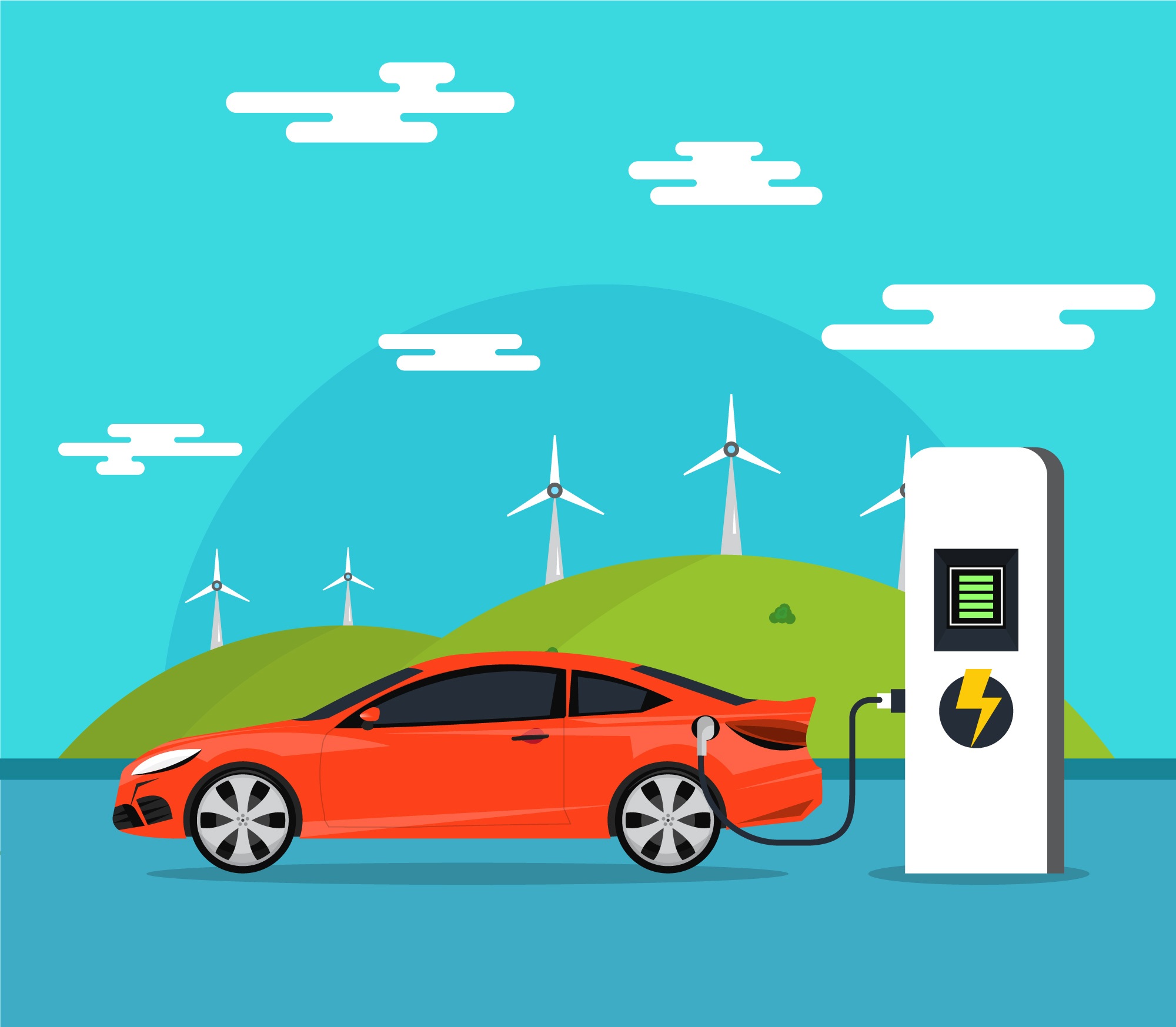
New Subsidy Schemes For Electric Vehicles: State Wise EV Subsidy Schemes 2022 : How To Apply Online, Features
Description about subsidy offered by every state purchasing of electric vehicles that is subsidy condition, percentages of subsidy etc

Table of Contents
Electric Vehicles
Today we are living in the 21st century. In this time interval we have seen many changes, like earlier people used to walk from one place to another, later bullock carts were used to make the journey more convenient, after that to make the journey more convenient. Motor vehicles started coming in trend. And today we see the most expensive vehicles running on the roads.
Due to this change and the increasing trend of new vehicles, the nature is going to suffer a lot in the future and may have to face the shortage of resources used in them.
Keeping all these things in mind, the Government of India is promoting electric vehicles.
If you are thinking of buying an electric vehicle, then this article will be very useful for you, in which you will be able to know the subsidy scheme of every state.
Electric Vehicles (EVs) are a promising alternative to ICE (Internal Combustion Engine) vehicles. Innovations in battery technology, reduction in moving parts, and zero tailpipe emissions make EVs an economically viable and sustainable mobility solution.
(Government of India) launched the National Mission on “Transformative Mobility and Energy Storage” to develop a complete ecosystem around EVs at the domestic level.
India is committed to reducing emissions by 33-35% by 2030 from 2005 levels and has set a target of 40% non-fossil based electricity generation in the energy mix. This requires radical measures to increase the share of renewable energy, in addition to the ongoing program of 175 GW RE by 2022.
Some possibilities are being expressed by this campaign being run by GOI Which are as follows:
- Battery cost will be halved
- Electric vehicle performance will be doubled
- The charging time is expected to be reduced from 5 hours to less than 1 hour,
FAME 1
The Government of India is coming up with new schemes to accelerate the ‘EV’ sector in the interest of creating environment-friendly conditions and fuel security.For which Government Of India launched the FAME (Faster Adoption And Manufacturing Of Hybrid And Electric Vehicles In India) scheme, whose objective is to:
- To reduce the use of diesel and petrol powered vehicles in the country
- To facilitate the sale of 6-7 million electrical and hybrid vehicles by the year 2020
FAME-1 was an experimental phase based on certain key points which are given below.
- create demand
- Preparation of charging infrastructure
Initially, the FAME 1 scheme was approved for 2 years from 1 April 2015. Later on the ‘EV’ subsidy scheme was extended from time to time which was finally extended till 31st March 2019
The scheme faced some difficulties such as the need to reduce the cost to increase the demand and low interest of the people due to lack of adequate charging stations.
FAME 2 Schemes:
FAME 2 was the second phase of the ‘EV’ subsidy scheme which was launched on 1st April 2019. The FAME-II scheme was originally for a period of three years ending on March 31, 2022.Earlier this year, it was extended till March 31, 2024.
- The main objective of this scheme is to reduce the demand of fuel by replacing petrol and diesel vehicles.
- The Cap on the incentive has been increased to 40% of the vehicle cost from 20%.
- This scheme promotes green ecosystem
- Affordable costing
- To Accelerate this phase, GOI has also given many types of subsidies in this scheme.So that all the Manufacturers, Suppliers, Distributors and Consumers can get the benefit of it.
These EV subsidies/incentives are provided by the respective State Governments and are applicable across the country, as follows:-
| State | Subsidy (in rupees) | Road tax exemption | Remarks
|
|||
| 2- wheeler | 4-wheeler | |||||
| Subsidy
(per KWh Of Battery Capacity) |
Max
Subsidy |
Subsidy (per KWh Of Battery Capacity) | Max
Subsidy |
|||
| Assam | 10000 | 20000 | 10000 | 150000 | 100% | Only for the first 1000 cars registered in the state |
| Andhrpradesh | NA | NA | NA | NA | 100% | |
| Bihar | 10000 | 20000 | 10000 | 150000 | 100% | |
| Delhi | 5000 | 30000 | 10000 | 150000 | 100% | |
| Gujarat | 10000 | 20000 | 10000 | 150000 | 50% | 2w- for the first 1.1L consumers
4w-for the first 1000 buyers |
| Kerala | NA | NA | NA | NA | 50% | |
| Karnataka | NA | NA | NA | NA | 100% | |
| Madhya Pradesh | NA | NA | NA | NA | 99% | |
| Maharashtra | 5000 | 25000* | 5000 | 250000* | 100% | 2w- first 1L buyer
4w- for the first 10000 buyers |
| Meghalaya | 10000 | 20000 | 4000 | 60000 | 100% | 2w- first 3500 buyers
4w- for the first 2500 buyers |
| Odisha | NA | 5000 | NA | 100000 | 100% | 2w- first 2L buyer
4w- for the first 5000 buyers |
| Punjab | NA | NA | NA | NA | 100% | |
| Rajasthan | 2500 | 10000 | NA | NA | NA | SGST reimbursement before 31 march 2022 |
| Tamil Nadu | NA | NA | NA | NA | 100% | |
| Telangana | NA | NA | NA | NA | 100% | 2w- first 2L buyer
4w- for the first 5000 buyers |
| Uttar Pradesh | NA | NA | NA | NA | 2W-100%
4-W-75% |
|
| West Bengal | 10000 | 20000 | 10000 | 150000 | 100% | |
 English
 Arabic
 French
 Hindi
Hindi Punjabi
 Russian
 Spanish
 Tamil
Tamil Telugu